Here's MBWW's marine naturalist, Lori Beraha, with a single teeny krill. A single whale, however, can eat millions of these little guys in a day.
 The krill brought out the whales, and the whales brought out the whale watchers, for a Thursday morning MBWW trip, leaving from the end of Fisherman's Wharf in Monterey.
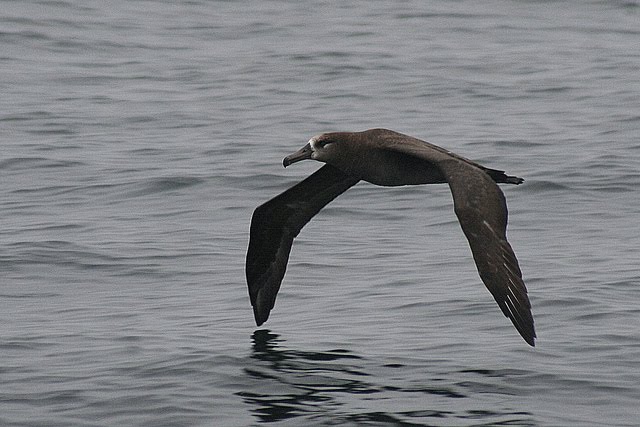
Almost 70 customers packed the boat, including a vacationing British family (whose three boys hogged the money view at the bow for four hours); a retired teacher and her seasick-prone husband, in town for their 44th wedding anniversary; and a quiet birder from Santa Cruz, who trained his binoculars on a passing black-footed albatross while everyone else gasped at a breaching humpback.
Here's a lovely photo of the species, taken on a recent whale watching trip by Alison Barratt of the Monterey Bay Aquarium:
 It didn't take long for us to see our first whales: a pair of humpbacks arcing gracefully through the gray water, showing off their fingerprint-unique flukes as they dove.
 By the time we reached the edge of the Monterey Submarine Canyon, the sightings had multiplied. Now we were surrounded by several pods of humps and a group of playful Risso's dolphins, which splashed along next to us for several minutes.
 We even caught a glimpse of the Zeus of whales: the mighty blue, the Earth's biggest animal, measuring up to 100 feet. The pair didn't do anything fancy for us, just a gentle arc, but that arc lasted astonishingly long as their enormous slender blue-gray bodies slid through the surface of the water.
Barratt snapped this photo during a recent whale watching trip. Can anyone tell me what blue whale body part this is?
 Hint: it's about 10 feet long and would put John Holmes to shame. What I'd like to know is, what is it doing sticking out of the water?
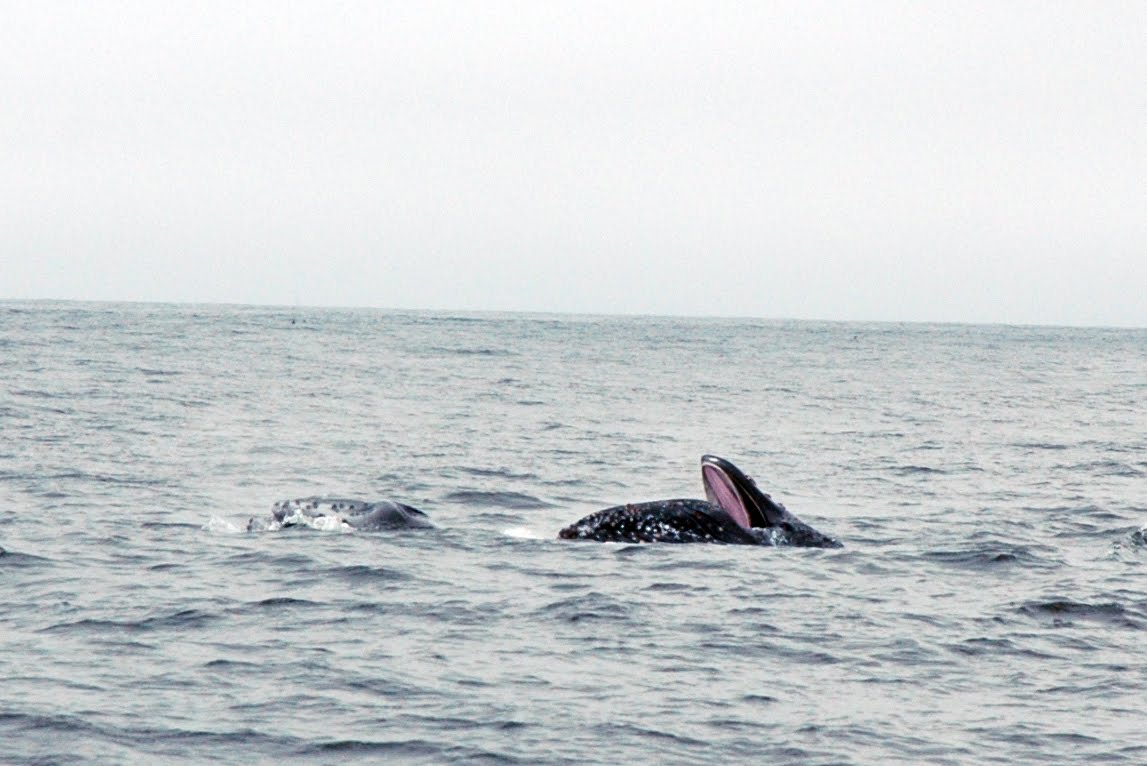
My favorite moment - and MBWW's Tony Lorenz's - is when the humps started "lunge-feeding": opening their giant mouths to take gulps of the surface krill. Both blue and humps are baleen whales, which means they don't have teeth, but rather swallow big glugs of ocean and then push the saltwater out through a filtering structure that's like a sieve in their mouths, leaving them with tasty bites of krill.


 Beraha's final cetacean count for the trip:
2 blue whales
42 humpbacks
80 Risso's dolphins
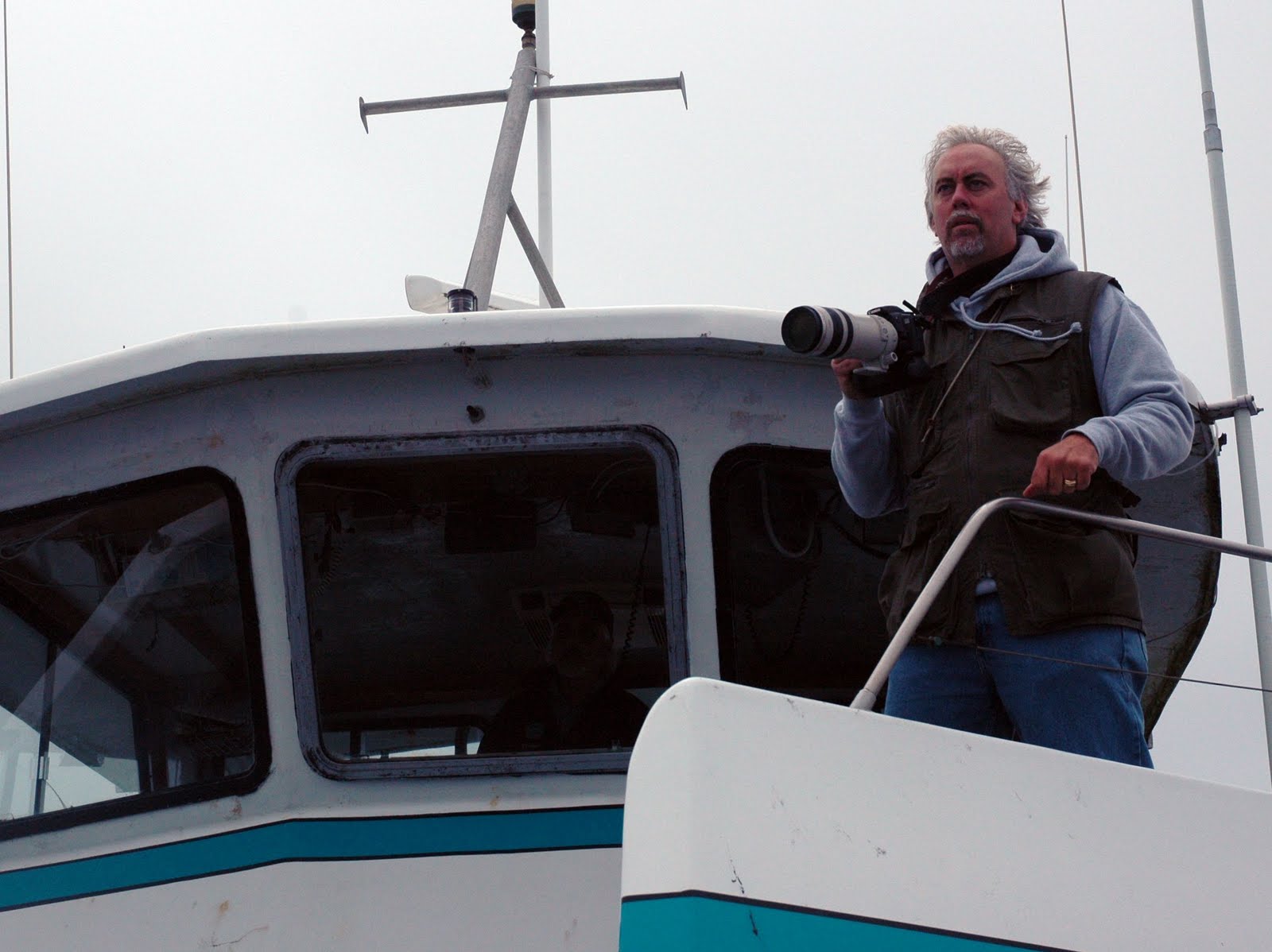
Lorenz (pictured below) - whose son Matteo was on hand to help out Thursday - says MBWW's three daily tours have been full to sold out lately, a trend he expects to continue as long as the whales keep on their krill binge. Blues and humpbacks tend to stick around into late fall. 375-4658, http://gowhales.com.
Bonus: Customers hungry after the voyage can snag a VIP card good for a free appetizer at the wharf's Cafe Fina, a green-certified restaurant that prides itself on ocean-friendly seafood selections.
I go for the barbecued sardines (normally $9.95) when they're in season: finger-smacking, sustainable silver slivers of the sea.


